- 8 min read
- Salons & Barbers
- July 10, 2026
- AI for UK salons and barbers
What to take from this article
- See where AI genuinely fits in salon and barber operations.
- Learn what to build first: website, booking, reception or automation.
- Avoid common system-buying mistakes and keep humans in control.
Introduction
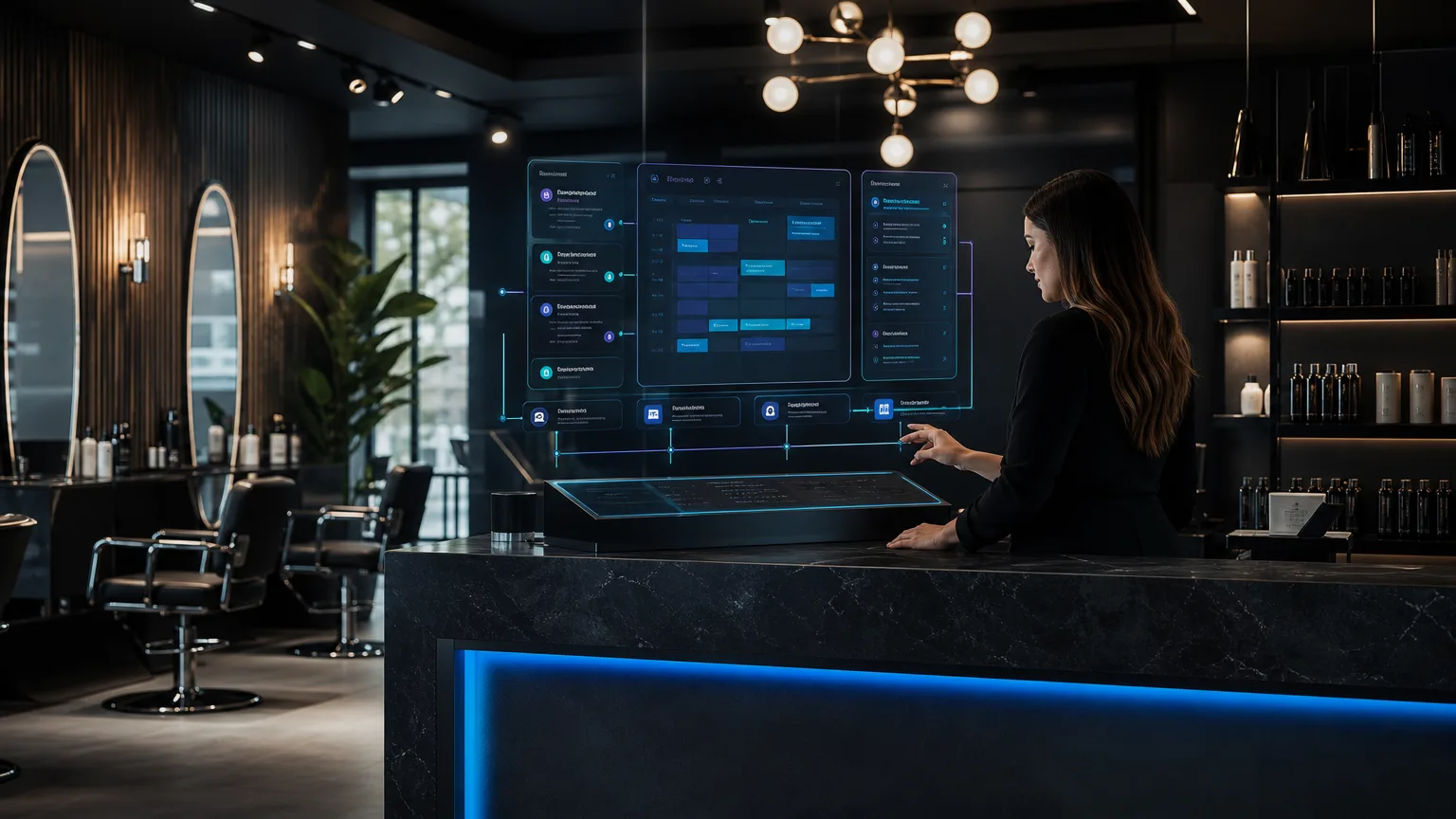
The modern salon or barber shop runs on timing, trust and tiny margins for error. One missed call can mean a lost booking. One clunky website can leak demand quietly for months. One messy diary process can turn a full week into a stressful one. That is where Silverstone AI fits: not with gimmicks, but with clean operating systems for UK small businesses that need sharper booking flows, better follow-up and calmer front-desk operations. The goal is simple: keep the experience personal while the systems become faster, tighter and far more reliable behind the scenes.
Where AI actually fits in a salon or barber business
Most owners do not need an ‘AI strategy’. They need fewer gaps between inquiry, booking, attendance and repeat business.
For salons and barbers in the UK, the best use of AI is usually narrow and practical. It can answer common pre-booking questions, route inquiries, handle simple follow-up, support rebooking journeys and help staff spend less time repeating admin. It should not pretend to replace judgment on suitability, color correction, treatment safety or any service decision that depends on professional expertise.
That distinction matters. A good system separates what can be automated, what should be assisted, and what must remain practitioner-owned. In a salon, that often means automating routine communication while keeping consultations, exceptions and nuanced client advice firmly with people.
This is especially relevant in the UK, where many small salons and barber shops operate with lean teams, high diary pressure and a mix of phone, Instagram, walk-ins and website inquiries. If those channels do not feed one clean workflow, the business ends up paying in lost time and missed conversion.
The right salon system does not remove the human touch. It removes the friction around it.
- Good usesAnswering opening hours, location, patch-test basics, service categories, availability steps and booking routes.
- Assisted usesLead follow-up, rebooking reminders, cancellation-slot messages and simple intake triage with staff review.
- Human-only usesTreatment suitability, pricing exceptions, complaints, safeguarding issues and complex service recommendations.
The digital stack that usually makes the biggest difference first
Start with the customer path, not the technology stack.
The highest-value work is usually boring in the best way: a faster website, a cleaner booking path, better inquiry handling and automated follow-up that actually reflects how the business runs. Many salons do not need a huge bespoke platform on day one. They need the core path from interest to attendance to work properly on mobile, because that is where a large share of discovery and booking intent sits.
A strong salon system usually has five layers: the public website, the booking or diary layer, inquiry capture, follow-up automation and reporting or visibility. If any one of those is weak, the owner ends up acting as the integration layer manually.
That is why the build order matters. A premium site with poor booking logic still loses business. A smart AI receptionist with no clear handoff rules can create confusion. A polished app is wasted if the basic rebooking and cancellation workflow still depends on memory.
- Build firstWebsite clarity, booking friction removal, inquiry capture and staff-owned handoff rules.
- Build nextRebooking automation, waitlist logic and simple AI reception for repetitive questions.
- Build laterCustom apps, deeper integrations and advanced operational reporting once the basics are stable.
Website layer
Mobile-first service pages, clear practitioner options, treatment FAQs, location trust signals and strong booking calls to action.
Booking layer
Service rules, staff availability, buffers, deposits, patch-test logic and realistic slot control.
Reception layer
Phone, web and message inquiries routed to the right answers, forms or human handoff.
Automation layer
Reminders, confirmations, no-show reduction, waitlist fills and repeat-visit prompts.
Visibility layer
A simple view of where bookings, drop-offs and admin bottlenecks are actually happening.
What a well-designed salon automation system should do
Think like an operator: each workflow needs a trigger, a rule, an action and an exception path.
A salon automation system should not be a pile of disconnected tools. It should behave like an operating model. Someone inquires. The system identifies the service category. It provides the right next step. If the question is routine, it handles it. If the request is unclear, sensitive or outside policy, it hands off cleanly.
That operating-system thinking is where many UK small businesses gain real value. The aim is not maximum automation. The aim is controlled automation with visible boundaries and simple ownership. That keeps the business efficient without making the customer experience feel robotic.
Typical workflows include missed-call follow-up, abandoned booking follow-up, deposit reminders, cancellation-slot alerts, and post-appointment prompts for rebooking or reviews. Each one needs careful wording, timing and opt-out handling. The details matter because salon customers are close to the brand. If messaging feels spammy or generic, it damages trust quickly.
| Decision point | Best used for | Main benefit | Human boundary |
|---|---|---|---|
| AI receptionist | Routine phone and web inquiries | Catches demand outside busy front-desk moments | Transfers edge cases, complaints and suitability questions |
| Booking automation | Confirmations, reminders and diary actions | Reduces manual admin and missed steps | Staff own overrides, refunds and policy exceptions |
| Content system | Service pages, FAQs and campaign content | Keeps messaging consistent across channels | Brand, offers and claims stay under business approval |
| Bespoke app | Unique member journeys or operational workflows | Creates a process that fits the business exactly | Should follow proven workflow demand, not guesswork |
Common mistakes UK salons make when buying digital systems
Most expensive mistakes happen before build starts.
The first mistake is buying tools in isolation. One system handles bookings, another captures leads, another sends messages and none of them share a clean source of truth. The result is duplication, manual patching and inconsistent customer communication.
The second mistake is over-automating the wrong moments. Not every customer wants an AI-led path. Hair and beauty services often include uncertainty, personal preference and trust-led buying behavior. That means the automation has to know when to step back and route to a person.
The third mistake is launching without operational rules. Who owns missed-call follow-up? What happens when the AI cannot answer? Which services require a manual suitability check? What happens to a cancellation request received after hours? Without these decisions, technology simply exposes operational ambiguity.
- Red flagThe demo looks clever, but no one can explain handoffs, ownership or failure states.
- Green flagThe solution starts with workflow clarity, channel cleanup and measurable operational pain points.
- Best question to askWhat happens when the system is unsure, the customer is upset, or the request falls outside policy?
A sharper buying checklist
Map the full customer journey before choosing tools.
Define what is automated, assisted and human-only.
Make one system the operational source of truth for booking status.
Check that mobile booking is genuinely fast and clear.
Set explicit exception routes for complaints, refunds, treatment concerns and sensitive queries.
What to build first if you run a small salon or barber shop
You do not need a massive transformation. You need the next right system.
If you are comparing what to prioritize, our approach on how we work is simple: start from the workflow, the commercial friction and the handoff points, then choose the smallest build that improves the system materially.
For owners deciding whether they need a site rebuild, app logic, AI reception or broader automation, the relevant view is not ‘what is possible?’ but ‘what breaks most often, and what is that costing in time, bookings or consistency?’. That is where practical consulting beats trend-chasing.
Salons and barbers also benefit from stronger content systems than they often realize. Service explanations, aftercare FAQs, policy pages and campaign content can all support conversion when structured properly. More on that sits across our services and broader industry work.
- Phase 1Fix the website, booking path and mobile conversion flow.
- Phase 2Add inquiry capture, missed-call recovery and sensible AI reception.
- Phase 3Deploy repeat-business automation and content systems.
- Phase 4Consider custom apps or deeper integrations if the workflow warrants it.
Build the next Silverstone system around your real workflow.
Bring the problem, the current stack and the commercial outcome. We will map the practical route from idea to deployed AI system.
Book a discovery call