
- 8 min read
- Fitness Coaches
- July 22, 2026
- fitness coach consultation no show follow up automation
What to take from this article
- Build no-show follow-up in stages, starting with one owner and one source of truth.
- Automate reminders and rebooking before adding branching logic or multi-channel complexity.
- Set clear stop conditions so replies, health-related context and exceptions always return to the coach.
Introduction
“A prospect missed their consultation call. Should I chase them, send a rebooking link, or leave it?”
For a UK fitness coach, that question matters because no-show follow-up sits close to sales, scheduling and trust. Too little follow-up and warm inquiries drift away. Too much automation and the process starts to feel impersonal or pushy.
The right answer is not to automate everything at once. It is to build a simple maturity model: one owner, one source of truth, one clear stop condition, then add reminders, rebooking and branching only when the basics are working. That is the sort of operational design Silverstone AI helps fitness businesses put in place through AI automation, with the coach still owning judgment, exceptions and the final conversation.
Why no-show handling needs a defined maturity model
A missed consultation is not just a diary issue. It is a workflow issue.
Many fitness coaches in the UK still handle no-shows reactively. One person checks the calendar, another sends a text when they remember, and sometimes nobody knows whether the lead has already replied on Instagram, email or WhatsApp. That creates inconsistent follow-up and makes it hard to tell whether the problem is reminders, timing or ownership.
A maturity model fixes that by introducing structure in stages. Instead of jumping straight to complex automations, you define the operational basics first.
The essentials are:
- A source of truth for the booking status, usually your CRM or booking system
- A named human owner for the no-show process
- A time window for the first follow-up
- A clear stop condition so automation does not keep nudging somebody who has opted out, replied negatively or already rebooked
- An escalation path back to the coach when the context needs human judgment
This matters commercially because a consultation no-show is not always low intent. People miss calls for ordinary reasons: work overruns, school pick-up, train delays, diary confusion or cold feet. A defined workflow lets you respond quickly without sounding robotic.
Research around coaching and scheduling platforms consistently points to the value of standardized follow-up and clear process steps after consultations. The practical lesson for fitness coaches is simple: treat no-show follow-up as an operating system, not as an afterthought.
- Source of truthThe booking or CRM record must decide whether the prospect attended, canceled, rebooked or asked not to be contacted.
- Human ownerOne person must own exceptions, replies and handoffs. In most coaching businesses, that is the coach or a named admin.
- Stop conditionAutomation should stop when the lead replies, rebooks, opts out or moves into a different sales stage.
Level 1: Manual follow-up with one clear owner
If your current process is messy, start by making it visible before you make it automatic.
Level 1 is deliberately simple. The aim is not speed at all costs. The aim is consistency.
At this stage, one person checks missed consultations and sends a short follow-up manually from the chosen business channel. For many solo or small coaching businesses, that may be SMS, email or WhatsApp, depending on how the booking was made and what consent the prospect has given.
Your workflow should look like this:
- The consultation is marked as missed in the source system.
- The named owner checks whether the prospect has already contacted the business elsewhere.
- The owner sends one plain follow-up message within a defined time window.
- If there is no reply, the owner sends one final follow-up later the same day or next working day.
- If the prospect replies, the owner handles the next step personally.
The message itself should be practical, not emotional. Keep it easy to answer. For example, ask whether they want to rebook and give a simple next step. Avoid health advice, body promises or pressure-heavy wording.
This stage often exposes the real process gaps. You may find duplicated messages, unclear diary status, or leads who sit in several places at once. That is useful information. It shows what needs sorting before automation is layered on top.
If you want a broader view of how this fits into the full lead journey, see Silverstone AI’s page for fitness coaches and the related article on fitness coach inquiry automation.
Good automation starts with a reliable manual process. If a human cannot follow the path clearly, software will only hide the confusion.
Level 2: Timed reminders and automatic rebooking links
Once ownership is clear, you can automate the obvious parts: reminders before the call and rebooking after a no-show.
A sensible stop condition at Level 2 is essential. If the prospect rebooks, replies, asks not to be contacted or is moved into another pipeline stage, the no-show automation should stop immediately.
This is where a bespoke setup matters. Silverstone AI typically approaches these workflows by mapping the trigger, approved actions, owner and exception route first, then building the automation around the real operating process rather than forcing the coach into a generic template.
| Decision point | What it handles well | Where it needs a human |
|---|---|---|
| Manual only | Personal tone and flexible judgment | Slow response, inconsistent timing and hard-to-track outcomes |
| Reminders plus rebooking link | Reduces missed steps and makes recovery quick | Replies, edge cases and sales conversations still need coach ownership |
| Over-automated sequence | Fast message delivery at scale | Can feel tone-deaf if the lead already replied, opted out or needs context |
Level 3: Branching follow-up by reason, channel and response
Only move to branching logic when you already trust your data, ownership and stop rules.
Level 3 is where no-show follow-up becomes more intelligent, but still bounded. The key word is branching, not autonomy.
Instead of sending the same follow-up to every missed consultation, the workflow takes a different path based on available information. That might include the booking source, channel preference, the prospect’s reply or the reason they gave for missing the call.
Useful branches can include:
- Booked from Instagram or website, but no reply yet
- Replied saying they forgot and want another slot
- Replied saying now is not the right time
- Missed the call after confirming earlier that day
- Has missed more than one consultation
At this level, the system can do more of the admin while the coach keeps control of anything sensitive or commercially important. For example, the workflow can classify the route, send the right approved message, update the CRM status and notify the coach when direct contact is needed.
What it should not do is make coaching judgments. It should not assess readiness for a program, interpret health information, suggest training suitability or handle nuanced objections without a human review point.
A strong Level 3 setup usually includes these design rules:
- The CRM or booking platform remains the source of truth
- Each branch has a named owner if the lead replies or the workflow stalls
- Response windows are defined so leads do not sit unhandled
- Repeated no-shows trigger a different route, often manual review
- Any mention of injury, medical conditions, medications or similar topics creates an immediate stop and handoff to the coach
This is where many UK fitness businesses benefit from a bespoke automation agency rather than an off-the-shelf sequence. The branching logic has to match the business model, the offer, the channels in use and the coach’s sales process. One size rarely fits cleanly.
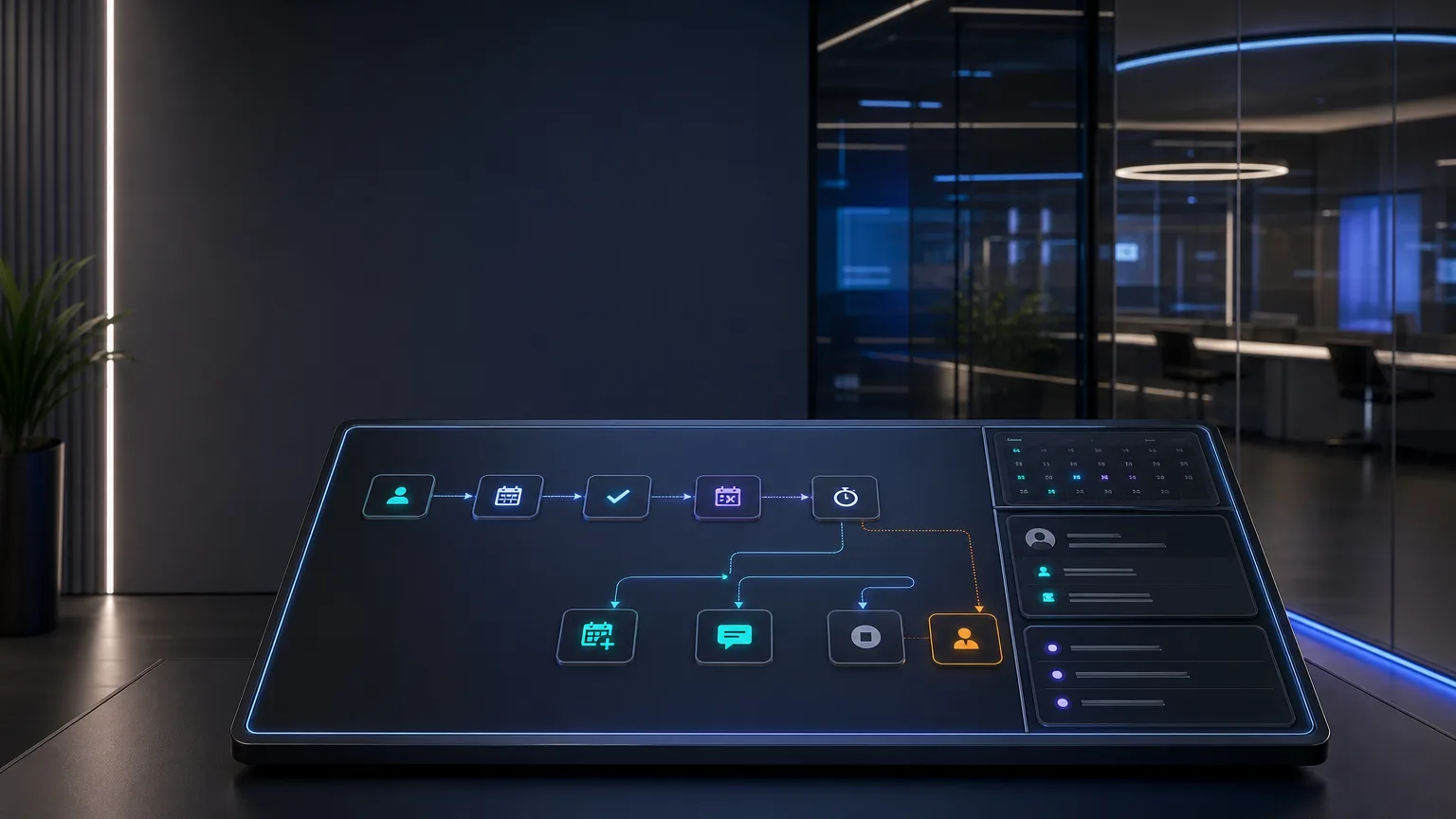
Trigger
Consultation marked as missed after the booked slot ends.
Decision layer
Check channel, previous contact, reply status and repeat no-show history.
Approved action
Send the right rebooking or pause message, then update the lead stage.
Human handoff
Coach or admin takes over if the prospect replies, objects, asks detailed questions or raises health-related context.
The rules that should stop automation and hand back to the coach
Good follow-up automation is defined as much by its boundaries as by its messages.
Fitness coaching sits close to personal goals, motivation and sometimes health-related discussion. That means your automation needs hard boundaries.
The hand-back rules should be explicit, documented and easy for staff to follow. If you skip this step, you risk confusing prospects and putting the wrong message into the wrong situation.
Your stop and handoff rules should usually include:
- The prospect replies with anything that needs a human conversation
- The prospect mentions pain, injury, medication, diagnosis or another health-related issue
- The prospect asks whether a plan is suitable for them personally
- The prospect asks for a bespoke price, package variation or payment exception
- The prospect has already missed more than your defined threshold of calls
- The source systems disagree on the booking status
- The prospect opts out or asks not to be contacted
For UK operators, this is also where process discipline matters from a privacy and consumer perspective. Use the contact permissions you actually have. Keep records accurate. Make sure a staff member can see what the automation sent and why. If calls or messages are handled through tools such as AI receptionists or related systems, the handoff route must still end with a named human owner.
In practical terms, the coach should always remain accountable for relationship-sensitive moments. Automation can support the process, but it should not replace judgment.
What to measure before scaling your no-show workflow
Do not judge the workflow by message volume. Judge it by operational clarity and next-step movement.
Before scaling your no-show follow-up, measure whether the workflow is actually behaving as intended. You do not need a complex dashboard to start. You do need a short list of useful signals.
Track measures such as:
- Number of consultation no-shows per week
- Percentage of no-shows that receive follow-up inside your target window
- Rebooking rate after the first follow-up
- Reply rate by channel
- Number of leads requiring manual handoff
- Cases where automation sent the wrong message or failed to stop
- Time from missed consultation to human intervention when needed
These measures tell you whether the process is ready for more complexity. If your statuses are wrong, replies go missing or handoffs are unclear, adding more branches will not help.
A practical review cycle looks like this:
- Audit ten to twenty recent no-show cases.
- Check whether the source of truth matched reality in each case.
- Review where the automation stopped, where it continued and where a human stepped in.
- Remove any branch that creates confusion without adding useful control.
- Scale only after the process is stable for several weeks.
For a UK fitness coach, that discipline often matters more than the choice of software. The best setup is the one your business can operate confidently. Silverstone AI’s role in projects like this is usually to help define the workflow, the ownership rules and the exception paths so the automation stays commercially useful instead of becoming another moving part to babysit.
If your current process still depends on checking several inboxes and calendars by hand, that is often the first sign to review your underlying workflow before adding more tools.
- Measure speedHow quickly a missed consultation gets a proper follow-up.
- Measure controlWhether stop conditions and handoffs worked exactly as designed.
- Measure recoveryHow many no-shows move back into a booked next step.
Build the next Silverstone system around your real workflow.
Bring the problem, the current stack and the commercial outcome. We will map the practical route from idea to deployed AI system.
Book a discovery call