
- 10 min read
- Salons & Barbers
- September 30, 2026
- salon patch test booking automation UK
What to take from this article
- Patch-test automation should block uncertain colour bookings, not wave them through.
- Use one source record with clear stop conditions, reminder logic, and named human owners.
- Keep suitability, contraindications, complaints, refunds, and consent decisions with people.
Introduction
If you run a salon in the UK, patch-test booking automation should block unsafe colour bookings, collect the right information, and hand uncertain cases to a human before diary time is released. The goal is not more automation for its own sake. It is a cleaner booking path with clearer responsibility.
That means your website, phone handling, and direct messages need one shared rule set: what the system may book, what it must ask, who owns the answer, and when the booking must stop. Patch tests, contraindications, suitability, and treatment advice stay human, even when the surrounding admin is automated.
As AI consultants and builders of AI agents, voice agents, AI receptionists, workflow automation, websites and apps, Silverstone AI would treat this as a risk-and-operations design job first. For more sector context, see our salons and barbers page.
When should patch-test rules stop an automated colour booking?
Your booking journey should stop automation whenever patch-test status is missing, outdated, contradictory, or linked to a health or sensitivity change that a practitioner has not reviewed.
For UK salons, the safest rule is simple: no automated colour slot unless the system can confirm a valid patch-test path and the client’s answers do not trigger a human review. That protects diary capacity and keeps the final suitability decision with a named person, not the software.
Research from Zenoti and OctopusPro points to the operational core: store test date, product used, result, and client acknowledgment against the client record, then use those fields as booking gates. If your source of truth cannot confirm those details, automation should not offer the slot.
In practice, stop the booking when any of these conditions appear:
- Patch-test status is unknown and no valid record exists.
- The client says their medication, skin sensitivity, or health details changed since the last colour visit.
- The client selects a colour or chemical service but the system cannot match it to a valid prior patch-test record.
- The booking arrives through a channel with insufficient information to make a safe routing decision.
- Staff notes, consultation history, and current answers conflict.
This is where a bounded AI receptionist service can help: it can explain the rule, offer the next step, and route the case. It should not decide treatment suitability.
What booking details should automation capture before any colour slot is offered?
Before a colour appointment is shown, your system needs enough structured data to confirm identity, service intent, patch-test status, change flags, and where a human should intervene.
The practical standard for UK salons is to collect only the data needed to route safely, then stop short of treatment judgement. That means structured booking fields, not free-text guesswork across Instagram DMs, voicemail, and reception notes.
From the research, a workable minimum includes client profile data, treatment history, patch-test dates, sensitivities, contraindication flags, consent records, and communication preferences. The strongest operational pattern is a single client record that follows the client across repeat visits.
If you are designing the workflow this week, ask for these inputs before the diary opens:
- Required channels
- 3+
- Critical record fields
- 4
- Human decision points
- Named
Website, phone, and message-based enquiries should use the same rule set.
Research supports date, product, result, acknowledgment.
Suitability and disclosures must map to a person or role.
- Source of truth
- The one system record your salon treats as authoritative for patch-test status and booking eligibility.
- Stop condition
- A rule that prevents the system from booking and sends the case to a human route instead.
- Human owner
- The practitioner or named team member responsible for a review, advice, or final suitability call.
- Escalation path
- The exact handoff from automation to a person, including who responds and how quickly.
Client identity
Full name, mobile number, and email so the record can be matched and reminders can run without duplicates.
Requested service
The exact colour or chemical service being requested, not a vague 'hair appointment' category.
Patch-test record
The stored date, product, result, and acknowledgment that support the booking gate.
Change triggers
A yes/no check for medication, health, skin, or sensitivity changes since the last relevant service.
Routing owner
Which named team member or role owns review when answers trigger a stop.
Consent and reminders
Communication preference and reminder logic, handled under UK GDPR and your salon’s privacy process.
Which details should stay optional rather than blocking the booking?
Do not turn every preference into a booking gate. Formula history, preferred stylist, and saved payment method can improve operations, but they should not obscure the real control question: is this client safe and eligible to book this service now?
A common failure is collecting too much, too early. That increases abandonment without improving safety. Focus first on identity, service type, patch-test status, and change flags.
Which patch-test decisions must stay with a practitioner or named team member?
Anything involving suitability, health disclosures, contraindications, treatment advice, complaints, or refunds should remain clearly human-owned, even when the surrounding workflow is automated.
The line is straightforward: use automation for capture, reminders, routing, and record checks; keep clinical-style judgement and service suitability with people. In UK salon workflows, that means a practitioner or named senior team member owns the call when the facts are not cleanly in policy.
The category guardrails are explicit here. Patch tests, contraindications, health disclosures, suitability, treatment advice, complaints, refunds, and marketing-consent decisions remain human. Your automation can surface the case and the record, but it should not decide the outcome.
- Named ownerEvery stop condition needs one accountable role: senior stylist, colour specialist, or manager.
- Visible handoffThe client should know whether they are awaiting a callback, patch-test booking, or manual review.
- Recorded rationaleWhen a human overrides or approves, note why in the client record.
Automation may do this
Use systems and AI agents for bounded admin that follows fixed rules.
- Check whether a patch-test record exists
- Offer a patch-test appointment
- Send reminders for the test and appointment
- Route exceptions to a named person
A human must do this
Keep judgement calls with a practitioner or accountable team member.
- Assess suitability after a disclosed change
- Interpret contraindications or sensitivities
- Give treatment advice or alternatives
- Handle complaints, refunds, or consent disputes
VerdictAutomate the process edges; keep the core judgement human.
How should your website, phone and DM journeys handle patch-test uncertainty consistently?
Consistency matters more than channel choice: every entry point should use the same source record, the same stop conditions, and the same handoff route when patch-test status is uncertain.
Clients do not think in channels. They might enquire on Instagram, call the salon, then book on the website. Your job is to make sure each route applies the same eligibility logic and lands in the same record. Otherwise, the weakest channel becomes the real policy.
This is where well-designed AI voice agents and workflow automation can help UK salons. They can gather standard details, explain the next step in plain language, and route to the right person. They should never improvise new patch-test rules.
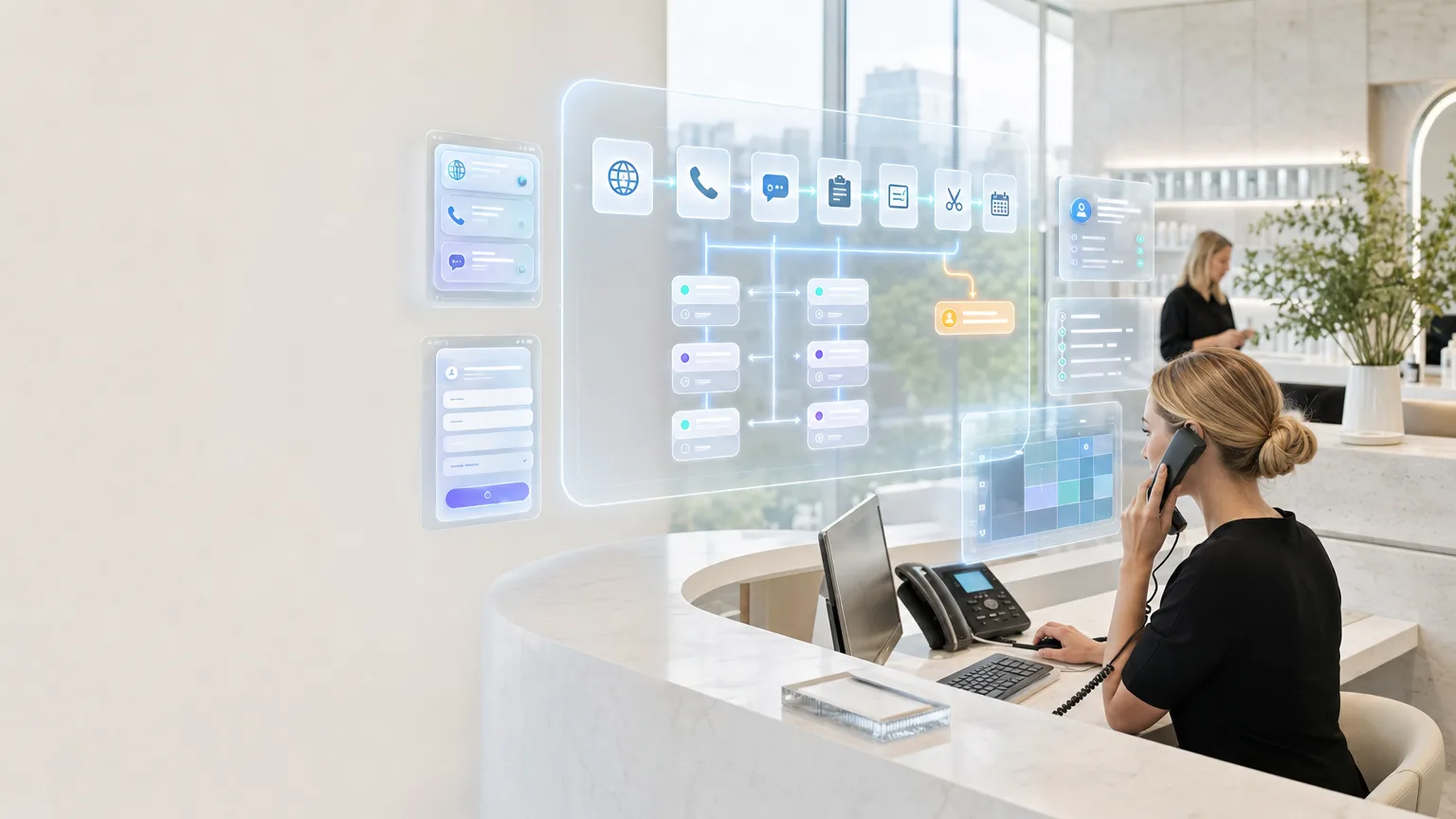
A consultant would usually map the journey in this order:
Yes, we can book your color for Thursday. If you had a patch test before, that should be fine.This creates risk because it assumes suitability and uses vague language.
We can help with that. Before any color appointment, we need to confirm your patch-test status and whether anything has changed since your last relevant service. If you send your full name and mobile number, we’ll check your record and either offer the correct next booking step or have a team member review it.This keeps the conversation helpful while protecting the stop condition and the salon record.
- 1
Set one rule set
Write the booking gates once: which services require a patch-test check, what counts as a stop, and who owns each escalation.
- 2
Choose the source record
Decide which system holds the authoritative client record so phone notes, website forms, and messages do not drift apart.
- 3
Standardize the channel scripts
Use the same core questions on web forms, receptionist prompts, and DM replies so answers are comparable.
- 4
Define the handoff
Route uncertain cases to a named practitioner or team inbox with a response expectation and visible status.
- 5
Protect cancellations
Do not use patch-test logic to obstruct cancellation. Keep cancellation and reschedule options straightforward.
| Decision point | What automation can do | What must stay human | Failure to avoid |
|---|---|---|---|
| Website booking | Collect structured answers and check record status | Review changed disclosures or unclear answers | Showing a colour slot before eligibility is confirmed |
| Phone | Use a script, capture details, route, and send reminders | Advise on suitability or exceptions | Relying on memory instead of the shared record |
| DM or social | Acknowledge, gather basics, move to the approved booking path | Handle nuanced suitability conversations | Making off-system promises in chat |
What should you audit before turning patch-test booking automation live?
Before go-live, audit the rule logic, record ownership, exception handling, reminder flow, privacy handling, and staff accountability so automation reduces admin without weakening safety or service quality.
A launch audit should test the workflow as if it were a new staff member: what it asks, what it books, what it blocks, what it records, and who is accountable when the answer is unclear. If any of those are fuzzy, keep the system in draft.
For UK salons, the privacy side also matters. If you are collecting personal information and consultation-related details, your process should align with UK GDPR and the expectations of the ICO. If you use phone or SMS journeys, the communications setup should also reflect your operational obligations under Ofcom rules where relevant.
Use this pre-launch audit checklist with your manager, senior stylist, or implementation partner.
- Mandatory owners
- 3
- Critical tests
- Unknown / changed / conflict
- Reminder streams
- 2
System owner, practitioner owner, and front-desk or ops owner.
These three scenarios should be tested on every channel.
Patch-test reminders and colour-appointment reminders should not be merged.
A safe salon automation launch is not about how much you automate. It is about whether every uncertain booking reaches the right human, with the right record, before diary time is committed.
- Service map confirmedWhich services trigger a patch-test check is written and approved.
- Source of truth chosenOne system owns patch-test status and client history.
- Required fields setDate, product, result, acknowledgment, and change flags are captured.
- Stop conditions testedUnknown, outdated, and contradictory records all block the colour booking.
- Human owner namedA practitioner or team member owns each escalation route.
- Reminder logic livePatch-test reminders and appointment reminders are separated and checked.
- Cancellation path clearClients can still cancel or reschedule without friction.
- DM containment in placeSocial and messaging journeys move clients into the approved booking path.
- Staff override policy documentedOverrides are logged with rationale.
- Privacy review completedData capture, retention, and access reflect UK GDPR handling.
Build the next Silverstone system around your real workflow.
Bring the problem, the current stack and the commercial outcome. We will map the practical route from idea to deployed AI system.
Book a discovery call